
Article overview
You know the moment. One second you're fine, the next a wave of heat is moving up through your chest and neck, and every instinct in your body is telling you to find something cold, right now. A window, a fridge door, a fan in a drawer somewhere. It's not in your head, and it's not something you're overreacting to.
Hot flushes are the most common menopause symptom there is, and cooling down quickly is already part of official UK self-help advice, not a wellness trend someone invented to sell you something. So the real question isn't whether cooling helps. It's whether a wearable neck fan is a genuinely useful way to do it, or just a gadget dressed up as one.
That's what this post looks at: what UK guidance actually says about cooling for hot flushes, and where MenoFan, the neck fan we've just added to the shop, fits into that picture.
So let's start with why a hot flush makes you want to grab something cold in the first place.
Why a hot flush makes you reach for anything cold
For most women, a hot flush arrives without warning. One moment everything's normal, the next there's a sudden wave of heat spreading up through the chest, neck and face, sometimes with a flush to the skin, a rush of sweat, or a heartbeat you can suddenly feel.

It's easy to assume this is just "feeling a bit warm", but it isn't. Hot flushes and night sweats, known together as vasomotor symptoms, affect up to 80% of women during the menopause transition, and on average they last for around 7 to 10 years (Source: The Menopause Society, 2025). For some women, that means the occasional flush. For others, it's several times a day, for the best part of a decade.
That's why the instinct to grab anything cold- a window, a fridge door, a fan tucked in a drawer- isn't an overreaction. It's a completely reasonable response to something your body is actively doing, not something you're imagining or making too much of.
Understanding that helps explain why cooling shows up so consistently in advice for managing hot flushes, not as a gimmick, but as one of the few things that responds to a flush while it's actually happening.
What UK guidance already says about cooling
If cooling down during a hot flush sounds like common sense rather than science, that's because it largely is, and it's already part of standard UK self-help advice, not something dreamed up to sell fans.
An NHS self-help resource for menopause symptoms lists opening a window or using a fan among its recommended ways to manage hot flushes and night sweats, both at home and at work. It sits alongside other everyday advice, like dressing in layers, using cotton sheets and bedding, and having cold drinks rather than hot ones, all things aimed at helping your body cool down quickly once a flush starts.
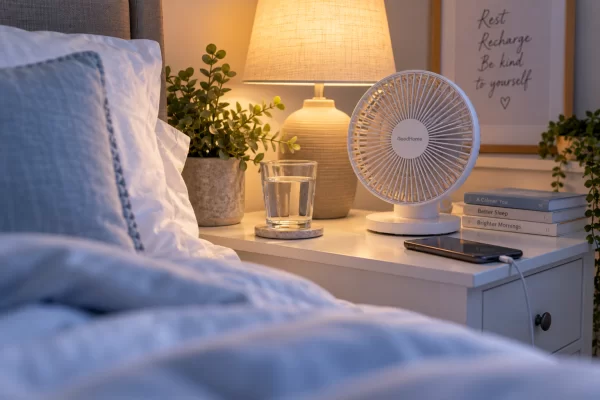
Night sweats get the same treatment. A UK council menopause information leaflet advises keeping a fan beside the bed specifically to help when night sweats strike, alongside keeping the bedroom temperature low and running cool water over the wrists.
None of this is framed as a cure. It's framed as practical, low-risk symptom management, something you do in the moment, not instead of a wider conversation about your symptoms if they're seriously affecting you. But it does mean that reaching for a fan during a flush isn't an alternative approach; it's already the advice.
Which raises the obvious next question: if a fan by the bed or an open window counts as proper advice, does a wearable neck fan count too, or is that just repackaging the same idea for a fee?
Meet MenoFan: what it actually is
This is exactly the kind of fan that advice is talking about, just built specifically to be worn rather than left on a desk or a bedside table.
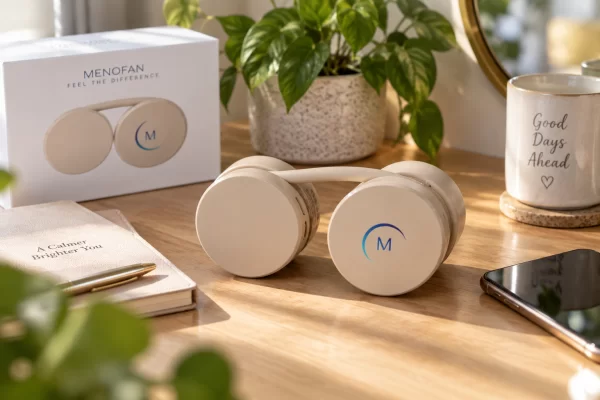
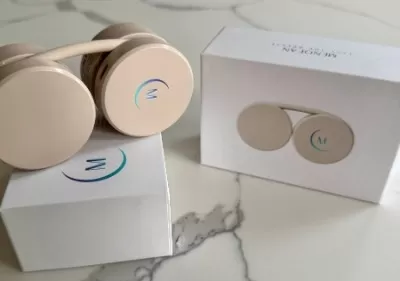
MenoFan is a small, rechargeable neck fan that sits around your neck like a pair of neckband headphones, with two smooth discs directing airflow up towards your neck and face. It's not a medical device, and it doesn't claim to be; it's a practical way to get that "open a window or use a fan" advice onto your body, hands-free, wherever a flush happens to strike.
It's rechargeable via USB-C, comes with a few adjustable speed settings, and is discreet enough to wear during a meeting, on a train, or beside the bed without looking like anything other than a stylish accessory. Several customer reviews on the brand's own site specifically mention using it during work meetings and for night sweats, worth noting as customer testimony rather than independent evidence, but a useful indication of how people are actually reaching for it.
We've put together the full breakdown, specifications, charging times, ingredients and safety notes, and an honest look at what to expect, on the MenoFan product page, so we won't repeat all of it here.
What a neck fan can and can't do for you
It's worth being straightforward about this, because it's the part most product pages skip.

A neck fan doesn't do anything to the hormonal changes that cause hot flushes and night sweats in the first place. It doesn't reduce how often they happen, how long the menopause transition lasts, or how intense any individual flush is at its worst. What it can do is help with the physical sensation of heat while a flush is happening, in the same way opening a window or splashing cold water on your wrists can.
If what you're looking for is something to reduce how disruptive your symptoms are overall, a neck fan isn't that, and it's worth having a wider conversation with a GP or menopause specialist about options like HRT or non-hormonal treatments. If what you want is a quick, low-risk way to take the edge off a flush while it's happening, in a meeting, on a journey, or at 3am, that's exactly the gap a wearable fan is designed to fill.
Is it worth trying?
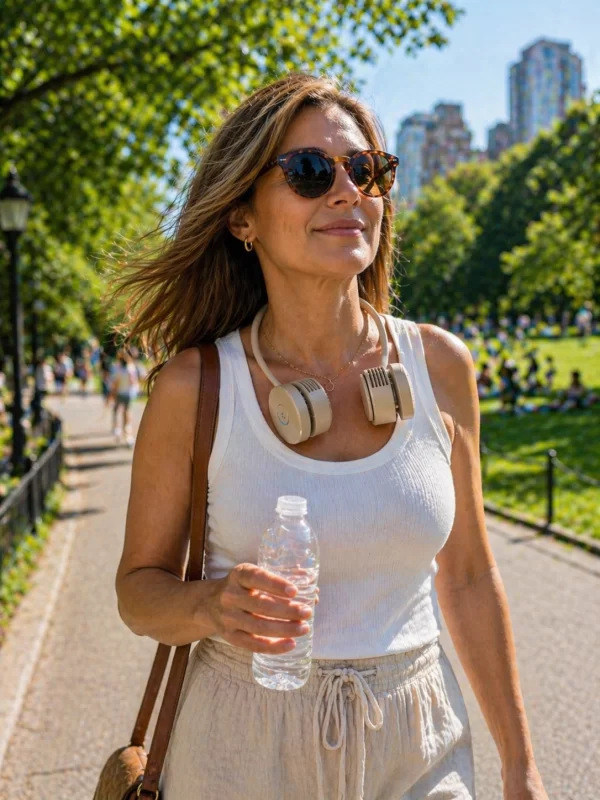
If you already reach for a fan, an open window, or a cold drink the moment a flush starts, a wearable neck fan is a small step from what you're doing now. It's discreet enough for a meeting, small enough for a handbag, and doesn't need you to hold anything or find somewhere to place it, which matters when a flush doesn't wait for a convenient moment.
It won't suit everyone. If you don't like wearing anything around your neck, or you're hoping for something that reduces how often flushes happen rather than helps you get through them, this isn't the right tool. And if your symptoms are frequent, severe, or affecting your sleep, mood or day-to-day life, that's worth raising with a GP or menopause specialist regardless of whether you also keep a fan in your bag.
For everyday, in-the-moment relief, though, it's a low-risk, practical option, built on advice that was already standard before anyone put it in a wearable shape.
Key Takeaways
Cooling down during a hot flush isn't a trick, it's already part of standard UK self-help advice, and a wearable neck fan like MenoFan is simply a more convenient way to act on it. It won't change why hot flushes happen or how often they occur, but for the moment itself, in a meeting, on a journey, or at 3am, it can genuinely help take the edge off. If your symptoms go beyond what cooling can manage, a conversation with a GP or menopause specialist is always the next right step. If you'd like to see MenoFan for yourself, it's now available in the shop.