
PRP overview
If you have searched for PRP and menopause, you have probably noticed that the results do not agree with each other. One page will tell you it transforms thinning hair, another will link it to intimate wellness, and a third might mention joint pain or even claim to reverse menopause itself. Part of the confusion is that "PRP for menopause" is not a single treatment at all. It is platelet-rich plasma, a substance made from your own blood, being applied to several unrelated concerns that happen to share a common cause: falling oestrogen.
This matters because the strength of evidence varies enormously depending on which symptom you are looking at. A treatment with solid trial data for vaginal dryness does not automatically carry the same weight when applied to joint pain, and a use that is genuinely promising in fertility research is not the same as a proven way to reverse menopause for the general population. Conflating these applications, whether by accident or through overenthusiastic marketing, makes it harder to judge whether PRP is actually a sensible option for your particular concern.
This guide works through each application in turn - hair, skin, vaginal health, joints, and the more experimental claims around fertility - alongside practical questions around HRT, UK costs, what actually happens in a session, and how to find a properly qualified practitioner. The aim is to give you a clear, evidence-led picture for the specific symptom you are dealing with, rather than a single verdict on PRP as a whole.
With that distinction in mind, it helps to start with what PRP actually is, and why menopause has made it such a widely offered treatment in the first place.
Products for PRP
What Is PRP, and Why Is It Being Offered for Menopause?
Platelet-rich plasma (PRP) is a treatment made from your own blood, and it is increasingly being marketed to women going through perimenopause and menopause for hair, skin, joint and intimate health concerns. Before looking at whether it works for any of these, it helps to understand what PRP actually is and why menopause has become such a common reason for offering it.
What PRP actually is
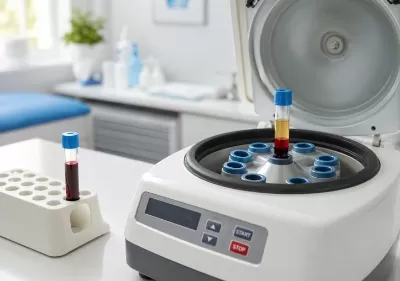
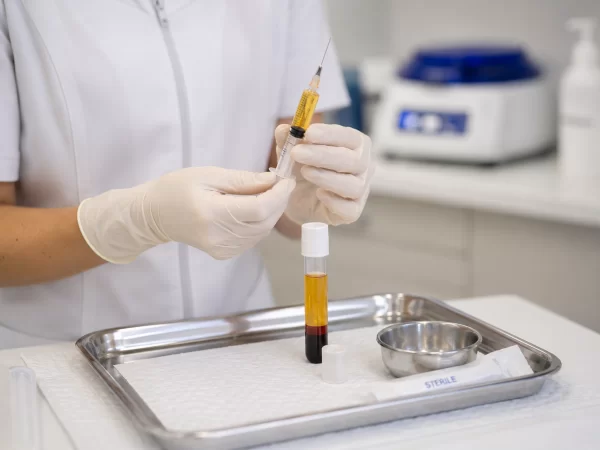
PRP is created by drawing a small sample of blood and spinning it in a centrifuge to separate out the platelet-rich layer. This concentrated plasma contains growth factors that the body normally uses to repair tissue, and it is then reinjected into the area being treated - the scalp, the face, a joint, or vaginal tissue, depending on the goal.
- It comes from your own blood, so there is minimal risk of allergic reaction.
- It has been used in orthopaedics and sports medicine for decades before moving into aesthetics.
- The same basic process is used across every application; only the injection site and technique differ.
Why menopause changes the picture
Falling oestrogen during menopause is linked to reduced collagen production throughout the body, which affects skin, hair follicles, joints and vaginal tissue in different ways. PRP is being offered as a way to locally stimulate repair in areas where this natural process has slowed. It is worth being clear from the outset, though, that PRP is not one single "menopause treatment". It covers several distinct procedures with very different levels of supporting evidence, which this guide looks at in turn.
Understanding PRP as a general tool, rather than a menopause cure-all, makes it easier to judge each specific use on its own merits.
Can PRP Help with Menopausal Hair Thinning?
Hair thinning is one of the most common reasons menopausal women look into PRP, and it is also one of the areas with the most supporting research. Here is what the evidence actually shows.
Why hair thins during menopause
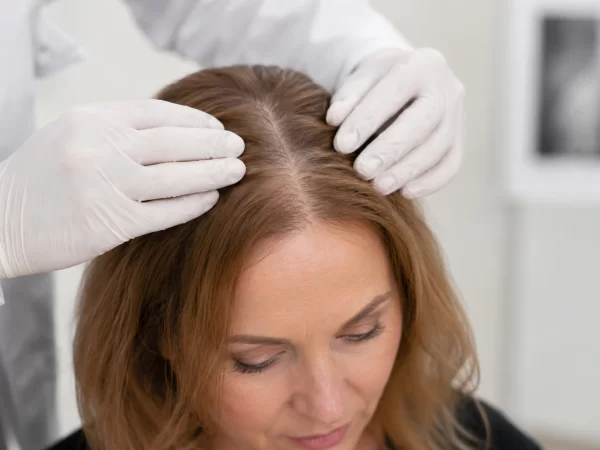
Falling oestrogen and relative increases in androgen sensitivity can affect the hair growth cycle, leading to a gradual reduction in density, particularly around the parting and crown. This pattern is often described as female pattern hair loss, and menopause is one of several possible triggers alongside genetics, stress and postpartum changes.
What the research says about PRP for hair loss
- A 2023 systematic review and meta-analysis of PRP for female androgenetic alopecia found consistent improvements in hair density and thickness across the studies, though the quality of individual trials varied.
- Results tend to be strongest when treatment starts while follicles are still active, rather than in areas of long-standing, complete hair loss.
- Most protocols involve a course of three to four sessions spaced several weeks apart, followed by occasional maintenance treatments.
- PRP does not replace an active hair follicle that has stopped functioning entirely, so it is not a solution for advanced or long-term bald patches.
Realistic expectations
PRP for menopausal hair thinning tends to work best as an early intervention, and results build gradually over months rather than appearing after a single session. It is sometimes combined with other approaches, such as topical minoxidil, though this should be discussed with a practitioner rather than assumed to be automatically beneficial.
Taken together, the evidence supports PRP as a reasonable option for early to moderate menopausal hair thinning, with the caveat that it works best as part of a considered plan rather than a one-off fix.
What Can PRP Do for Menopausal Skin?
Skin changes are one of the more visible effects of menopause, and PRP is often positioned as a natural way to address them. It helps to be clear about the scale of what PRP can realistically offer here.
How menopause affects the skin
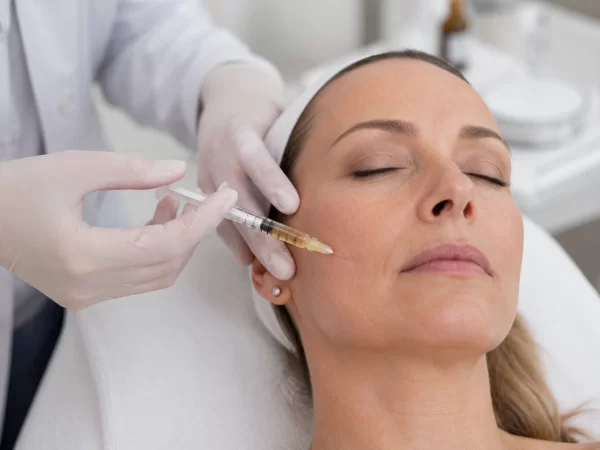
Oestrogen plays a significant role in collagen production, and its decline is linked to a notable drop in skin collagen in the years immediately following menopause. This contributes to thinner skin, reduced elasticity, and more visible fine lines, particularly on the face, neck and decolletage.
What PRP can offer
- PRP stimulates fibroblasts, the cells responsible for producing collagen and elastin, which can gradually improve skin texture, tone and firmness.
- Improvements tend to be subtle and develop over several weeks to months, rather than delivering an immediate lifting or plumping effect.
- It is often combined with microneedling to improve product penetration, though this adds cost and should be discussed as a separate decision.
- Results are generally described as a refreshed appearance rather than a reversal of structural changes such as volume loss or deep wrinkles.
Where PRP has limits
PRP works at a cellular level to support collagen production, but it cannot compensate for the scale of collagen loss that oestrogen decline can cause. For more pronounced volume loss or deeper lines, other treatments such as dermal fillers may be more appropriate, and PRP is better understood as a complementary option rather than a like-for-like alternative.
PRP can be a reasonable addition to a broader skincare approach during menopause, but it is worth setting expectations around gradual, modest change rather than dramatic transformation.
PRP for Vaginal Dryness and Discomfort: How Does It Compare to Vaginal Estrogen?
Vaginal dryness, discomfort during sex and mild urinary symptoms are common during menopause, and PRP - sometimes marketed as the O-Shot - is increasingly offered as an option. This section looks at how it actually compares to the established first-line treatment, vaginal oestrogen.
Why this happens during menopause
These symptoms fall under what is clinically known as genitourinary syndrome of menopause (GSM), which affects roughly 50 to 80 percent of postmenopausal women. It is caused by declining oestrogen, leading to thinner, less elastic vaginal tissue with reduced natural lubrication.
What the evidence shows
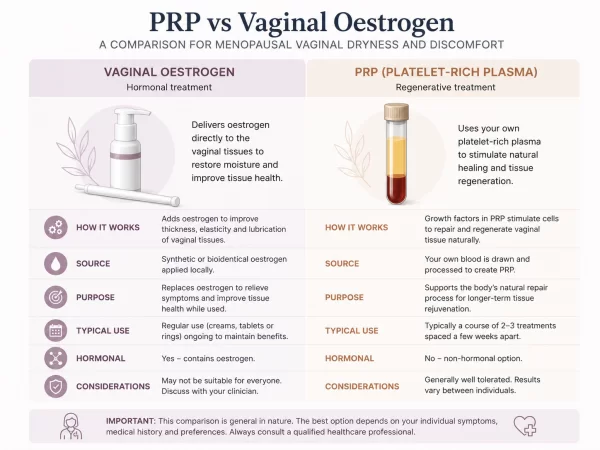
A 2025 randomised controlled trial compared intravaginal PRP directly against vaginal estriol in 90 postmenopausal women. Both treatments produced significant improvements in sexual function and vaginal health scores over 12 weeks, and while PRP showed a slightly larger average improvement, the difference between the two groups was not statistically significant. Patient satisfaction was high in both groups.
- Vaginal oestrogen remains the standard, well-established first-line treatment for GSM.
- PRP performed comparably in this trial, not better, which is a more accurate summary than the "PRP outperforms hormones" framing sometimes used in marketing.
- PRP may be worth discussing for women who cannot or prefer not to use vaginal oestrogen, though this should be a clinical decision, not a self-directed one.
A simple comparison
| Vaginal oestrogen | Intravaginal PRP | |
|---|---|---|
| Evidence base | Well established, first-line | Emerging, smaller trials |
| Suitability | Not suitable for everyone | Generally hormone-free |
| Sessions | Ongoing daily/weekly use | Typically 3 sessions |
| Availability | Widely prescribed | Fewer trained providers |
PRP is not shown to be superior to vaginal oestrogen for GSM, but the evidence suggests it can be a genuinely comparable option worth a conversation with a gynaecologist or menopause specialist, particularly where hormonal treatment is not suitable.
PRP for Menopausal Joint and Tendon Pain: A New but Unproven Use
Joint stiffness and tendon pain are rarely discussed alongside menopause, yet many women notice new aches in their hands, knees, shoulders or elbows during this stage of life. PRP is starting to be offered here too, though the evidence is considerably less settled than for hair or skin.
Why joints and tendons are affected
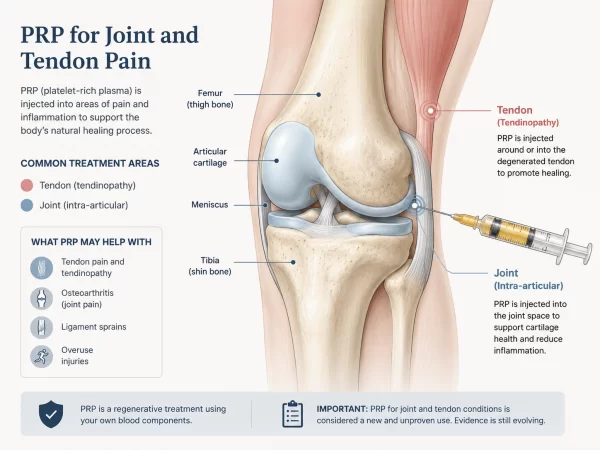
Oestrogen receptors are present in cartilage, tendons and ligaments, and oestrogen plays a role in maintaining collagen production and lubrication in these tissues. As levels fall during menopause, some women experience what is increasingly being described as musculoskeletal syndrome of menopause, which can show up as stiffness, tendinopathy or general joint discomfort, particularly in the hands, knees, hips and shoulders.
What PRP is being used for here
- PRP is injected directly into a joint or around a tendon, delivering a concentrated dose of growth factors intended to support local tissue repair.
- It is being explored for conditions such as tennis elbow, frozen shoulder, Achilles tendon pain and early-stage knee osteoarthritis.
- The idea is that PRP can provide localised support in areas where declining oestrogen may have slowed the body's natural repair processes.
Why this section carries a caution
Evidence for PRP in joint pain generally is mixed rather than clearly positive. One 2022 study examining PRP injections for thumb-base and STT joint osteoarthritis found no measurable effect on pain, grip strength, or hand function. This does not mean PRP never helps with joint pain, but it does mean the picture is far less clear-cut than for hair thinning or GSM, and results can vary considerably depending on the joint and condition involved.
If you are experiencing new joint or tendon pain during perimenopause or menopause, it is worth raising this with a GP first, since the underlying cause and the most appropriate treatment can vary. PRP may be part of that conversation, but it should not be assumed to be a reliable fix based on current evidence.
Can PRP Reverse Menopause or Restore Fertility?
This is one of the most searched questions around PRP and menopause, often driven by social media claims, and it deserves a straightforward answer. The short version is that PRP is not an established way to reverse menopause, and this use is entirely separate from the hair, skin and vaginal applications covered elsewhere in this guide.
What ovarian PRP actually is
Intraovarian PRP, sometimes called ovarian rejuvenation, involves injecting PRP directly into the ovaries. It has been explored in fertility research, primarily for women with diminished ovarian reserve or premature ovarian insufficiency, with the aim of supporting ovarian function ahead of IVF.
What the evidence actually shows
- Some observational studies have reported temporary changes in hormone markers such as FSH and AMH, and occasional spontaneous pregnancies, following ovarian PRP.
- A recent systematic review and meta-analysis described the results as promising but noted that reliable clinical evidence is still limited, and that ovarian PRP is not yet widespread or accepted in standard clinical practice.
- This research is focused on fertility outcomes in specific patient groups, not on reversing natural menopause or restoring periods in the general population.
Why the distinction matters
It is easy to see how "PRP can restore ovarian function in fertility patients" gets simplified online into "PRP can reverse menopause," but these are not the same claim. Menopause is a natural, permanent transition, and there is no accepted evidence that PRP - in any form - can reverse it. If you come across marketing that suggests otherwise, it is worth treating that claim with real scepticism and asking what evidence, specifically, it is based on.
If you are exploring PRP in a fertility context, that conversation belongs with a fertility specialist, not a general aesthetics clinic, and it is a genuinely different discussion from PRP for hair, skin, joints or vaginal symptoms.
Is PRP Safe Alongside HRT?
Many women considering PRP for menopause symptoms are already on HRT, and it is a reasonable question whether the two interact. The honest answer is that there is currently very little direct research on this specific combination.
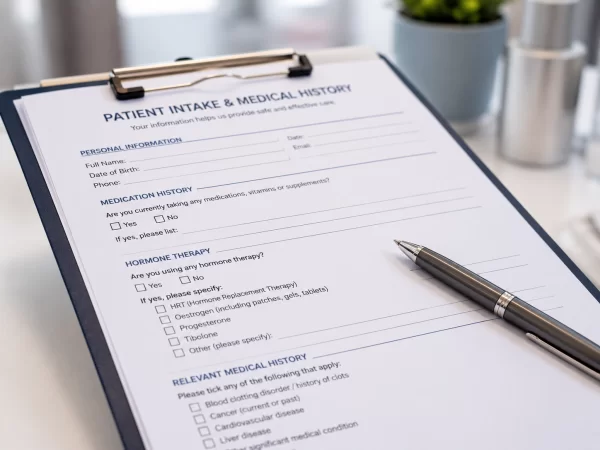
What is actually known
Most PRP safety research has not been carried out specifically in women taking HRT, so clear, dedicated guidance does not really exist yet. One small, older study looking at hormone replacement therapy and blood platelets found that combined HRT was associated with changes in certain platelet activation markers over 12 weeks, though this was not studied in the context of PRP treatment specifically, and its practical relevance to PRP outcomes is unclear.
- There is no established evidence that HRT makes PRP more or less effective.
- There is no established evidence that PRP interacts negatively with HRT.
- The gap here is a lack of research, not evidence of a problem.
What this means in practice
Because the evidence is limited rather than reassuring or concerning, the sensible approach is straightforward: tell your practitioner that you are on HRT, including the type, dose and how long you have been taking it, before any PRP treatment. This allows them to take a full medical history into account and make an individual judgement, rather than you or the clinic assuming it is automatically fine.
- Always disclose HRT, alongside any other medications, at your consultation.
- Ask your practitioner directly whether they have experience treating patients on HRT.
- Do not assume that being on HRT rules PRP in or out without a proper discussion.
Being on HRT is not a known reason to avoid PRP, but the lack of dedicated research means this is a conversation to have with a qualified practitioner rather than a question to answer for yourself.
What Does PRP for Menopause Cost in the UK?
Cost is a genuine factor in deciding whether PRP is worth pursuing, and prices vary considerably depending on the area being treated. Menopause-related PRP is not priced as a single treatment, so it helps to break this down by application.
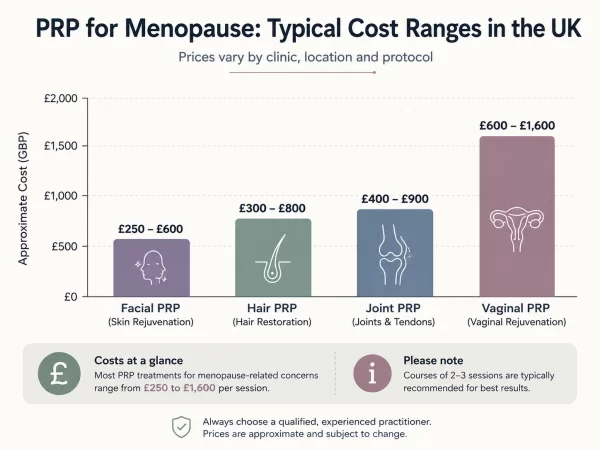
Typical UK price ranges
- Facial PRP: approximately £250 to £450 per session.
- Hair restoration PRP: approximately £350 to £650 per session.
- Joint or musculoskeletal PRP: approximately £300 to £500 per session.
- Vaginal or intimate PRP (O-Shot-style treatment): pricing varies more widely between clinics and is less standardised than facial or hair PRP, so it is worth requesting a clear quote in advance.
What affects the price
- Most menopause-related PRP applications require a course of three to six sessions rather than a single visit, so the realistic cost is usually several times the price of one session.
- Clinic location matters, with prices in central London and other major cities generally higher than in regional areas.
- The equipment and PRP system used, along with the practitioner's experience, can also affect pricing, though a higher price does not automatically guarantee better quality.
- Maintenance sessions, often recommended every six to twelve months, add to the ongoing cost of any PRP plan.
A practical note on budgeting
Because a full course typically spans several sessions, it is worth asking for the total cost of a complete treatment plan at consultation, rather than judging affordability from a single session price. This also makes it easier to compare PRP against other treatments for the same concern, such as vaginal oestrogen or topical hair treatments, on a like-for-like basis.
PRP is rarely a one-off cost, so budgeting for a full course, plus any maintenance, gives a more accurate picture than the headline per-session price.
What Happens During a Session, by Treatment Area
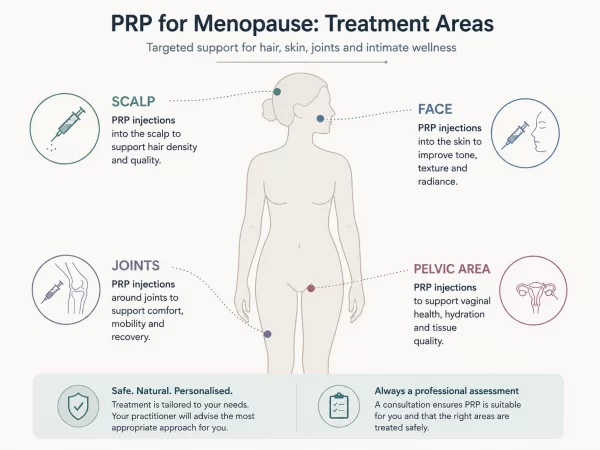
The core PRP process is the same regardless of which area is being treated, but the application itself differs depending on whether you are having hair, facial, joint or vaginal PRP. Knowing what to expect for your specific treatment can make the process feel less unfamiliar.
The part that stays the same
Every PRP session begins with a blood draw, usually 10 to 30ml, similar to a routine blood test. This is placed in a centrifuge and spun for around 10 to 15 minutes to separate out the platelet-rich layer, which is then prepared for injection.
How the application differs by area
- Hair (scalp): PRP is injected across thinning areas using a fine needle or mesotherapy device. A numbing cream is often used beforehand, and sessions typically last 60 to 90 minutes in total.
- Face: PRP is injected into the skin, sometimes alongside microneedling to aid absorption. Mild redness or swelling for 24 to 72 hours afterwards is common.
- Joints and tendons: PRP is injected directly into or around the affected joint or tendon, sometimes with ultrasound guidance for accuracy. Some soreness in the treated area for a day or two is typical.
- Vaginal: PRP is injected into specific areas of vaginal or clitoral tissue, usually taking around 30 minutes in total including preparation. Topical anaesthetic or comfort measures may be offered, and mild swelling, spotting or tenderness can follow.
What to expect afterwards
Across all applications, some redness, swelling or tenderness at the treatment site is a normal part of the body's response and usually settles within a couple of days. Results are not immediate in any of these applications; they build gradually over weeks as the growth factors stimulate repair.
Whichever area is being treated, ask your practitioner in advance exactly what technique they use and how long the appointment will take, since this can vary between clinics even for the same type of PRP.
Who Shouldn't Have PRP During Menopause?
PRP is generally considered low risk because it uses your own blood, but it is not suitable for everyone, and some of the relevant contraindications become more common during and after menopause. It is worth knowing these before booking a consultation.
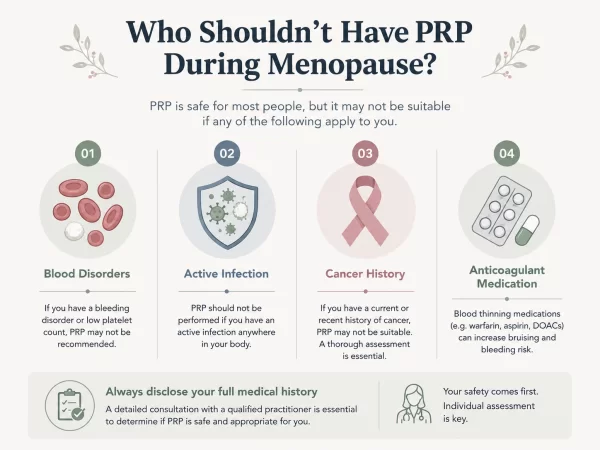
General contraindications that apply to everyone
- Blood or platelet disorders, including low platelet counts or clotting problems.
- Active infection or inflammatory skin conditions at the treatment site.
- Certain cancers, particularly blood cancers, where stimulating cell growth is generally avoided.
- Chronic liver disease, which can affect clotting function and platelet quality.
Considerations more relevant around menopause
- Anticoagulant medication: Many women are prescribed blood thinners for cardiovascular risk management as they get older, and these can interfere with PRP's effectiveness and increase bruising risk. This is worth flagging even if the medication feels unrelated to the treatment area.
- Autoimmune conditions: Conditions such as rheumatoid arthritis, which can become more prominent around midlife, may cause an unpredictable response to PRP and should be discussed with a practitioner.
- Ongoing cancer treatment or recent cancer diagnosis: This applies to any active or recent cancer, not only reproductive cancers, and should always be disclosed regardless of how unrelated it may seem to the treatment area.
The bigger point
None of these conditions are unusual at this life stage, which is exactly why a proper medical history should be taken before any PRP treatment, not skipped over. A practitioner who does not ask detailed questions about your medical history and current medications before recommending PRP is a red flag in itself.
If any of the above applies to you, it does not necessarily rule PRP out completely, but it does mean a fuller conversation with a qualified practitioner is needed before proceeding.
Is PRP Worth It for You?
There is no single answer to whether PRP is worth it during menopause, because it depends entirely on which symptom you are treating and how well-supported the evidence is for that specific use. Pulling the threads of this guide together should help you weigh it up.
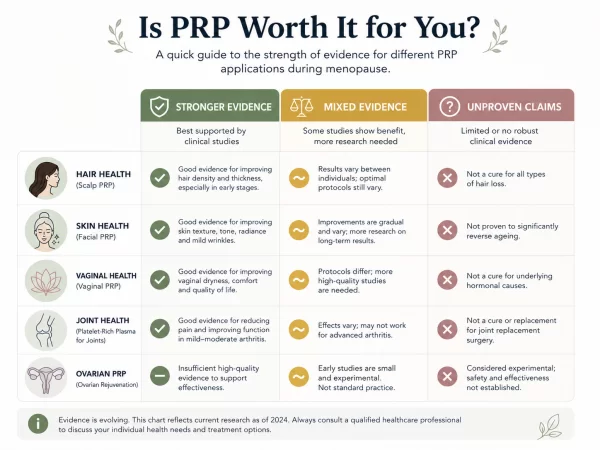
Where the evidence is reasonably solid
- Hair thinning: reasonable evidence for early to moderate cases, though not a fix for advanced hair loss.
- Vaginal dryness and GSM: comparable results to vaginal oestrogen in trial data, worth discussing as a genuine option.
Where the evidence is thinner or mixed
- Skin: modest, gradual improvement, not a substitute for the scale of hormonal collagen loss.
- Joints and tendons: an emerging use with inconsistent results depending on the joint and condition.
Where the claims outpace the evidence
- Reversing menopause or restoring fertility through ovarian PRP: not supported by current evidence for general use, and a separate field from cosmetic or symptom-led PRP entirely.
Questions worth asking yourself before booking
- Which specific symptom am I trying to address, and does the evidence for that use actually support it?
- Am I prepared for a course of several sessions, rather than a single visit?
- Have I checked the practitioner's qualifications and experience for this specific application?
- Have I disclosed my full medical history, including HRT and any other medications?
- Have I compared PRP against other established treatments for the same concern, such as vaginal oestrogen or minoxidil?
PRP can be a reasonable option for some menopause-related symptoms and a less convincing one for others, so the most useful next step is matching your specific concern to the right specialist rather than treating PRP as a single, universal decision.
How to Find a Properly Qualified PRP Practitioner in the UK
PRP is not a treatment where any provider offering it is automatically qualified to do so, and this matters more for menopause-related applications, particularly vaginal PRP, where regulation is less consistent than for more established cosmetic procedures. The simplest way to start is by searching for a verified specialist rather than relying on general search results or social media recommendations.
Why this varies so much in the UK
PRP sits in a regulatory grey area compared with treatments like Botox or prescription medicines. Vaginal and intimate PRP in particular is offered by a mix of GMC-registered doctors, nurse prescribers and less regulated providers, and the difference in training between them can be significant.
Start with a verified specialist search
Rather than working through credentials one by one for every clinic you come across, you can search our directory of verified menopause specialists to find practitioners who treat menopause-related concerns, including PRP, within a proper clinical setting. This narrows the search to professionals who have already been through a verification process, rather than starting from an open web search.
What to check regardless of how you find a practitioner
- Medical registration: Look for registration with the GMC, NMC or GDC, ideally with specific training in PRP for the area you are considering.
- Relevant experience: Ask how often they perform PRP for your specific concern, since experience with facial PRP does not necessarily translate to vaginal or joint applications.
- Clinical environment: Treatment should take place in a sterile, medically appropriate setting, not a beauty salon or informal space.
- Transparent consultation: A proper consultation should cover your medical history, realistic expectations, risks and total cost, not just a quick sign-up.
Red flags worth taking seriously
- Pressure to book multiple sessions on the spot, before a proper assessment.
- Reluctance to explain their training or how long they have been performing PRP.
- Pricing that seems unusually low compared with other UK clinics offering the same treatment.
- No clear explanation of what type of PRP system or preparation method they use.
Starting your search with a verified specialist directory, then checking credentials and asking the right questions at consultation, is one of the most practical ways to reduce risk before committing to any menopause-related PRP treatment.
Frequently Asked Questions
Is PRP painful during a menopause-related treatment?
Is there an age limit for having PRP during menopause?
Can I have PRP if I have had breast cancer?
Is PRP available on the NHS for menopause symptoms?
What is the difference between PRP and PRF for menopause treatments?
Can perimenopausal women have PRP before symptoms become severe?
Some practitioners offer PRP earlier in perimenopause on a preventative basis, particularly for hair thinning, on the theory that treating active follicles early may produce better results than waiting until hair loss is advanced. This approach is reasona
Can PRP be combined with collagen supplements during menopause?
Are there any side effects specific to PRP that menopausal women should know about?
Does PRP have any effect on hot flushes or night sweats?
Can I exercise normally after having PRP during menopause?
Is PRP a one-off treatment or something I need to repeat over time?
Practitioner information
Are you a practitioner? If you'd like to link your practice to PRP and become part of The Menopause Network, you can register as a verified specialist using the information on our specialist registration page.
Once verified, your profile can feature PRP alongside the other treatments and products you offer, helping patients searching The Menopause Network find you directly.
Our Preferred Partner: Cellenis PRP
As more women seek natural, regenerative treatments during menopause, Platelet Rich Plasma (PRP) is becoming an increasingly valuable addition to modern clinics. From skin rejuvenation and hair restoration to intimate health applications, PRP can help you expand your treatment offering and attract new patients.
If you're considering introducing PRP, our dedicated practitioner resource explains everything you need to know, including training, equipment, clinical applications and the commercial opportunities for your practice.
Find out how PRP could help grow your clinic and enhance the care you provide to menopausal women.